
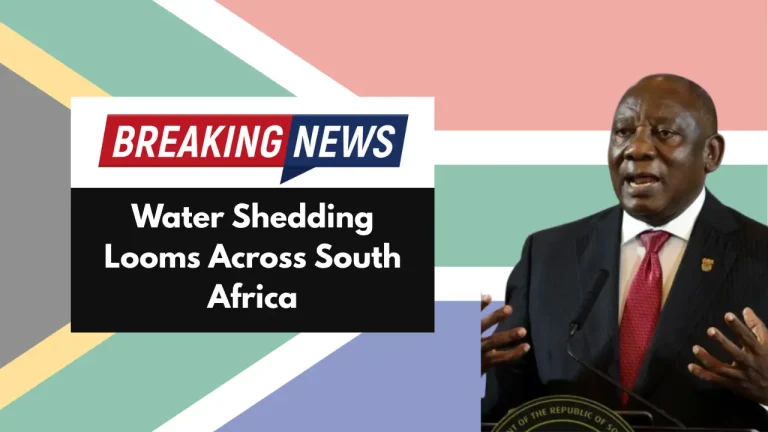
South Africans may soon face another major challenge — water shedding. Following years of electricity load-shedding, experts now warn that planned water cuts could become a reality in multiple provinces due to aging infrastructure, high demand, and declining dam levels.
Municipalities are already preparing contingency plans to rotate water supply in high-demand areas to prevent complete system collapse. This comes amid warnings from the Department of Water and Sanitation (DWS) that water systems in several urban centers are operating at dangerously low capacity levels.
What Is Water Shedding?
Water shedding is a controlled process where municipalities temporarily cut water supply to certain areas to manage shortages, maintain pressure, and prevent system failures. It works similarly to load-shedding — but instead of electricity, water is restricted or shut off for specific time blocks.
During water shedding, supply is alternated between regions or suburbs, allowing reservoirs to refill and pipelines to stabilize. This measure is usually implemented during droughts, infrastructure failures, or maintenance emergencies to ensure that all communities have access to at least minimal water supply throughout the crisis.
Why Water Shedding Is Looming
Several factors have converged to create the current crisis:
1. Aging Infrastructure and Leaks
South Africa’s water infrastructure is in poor condition. Many water pipelines are decades old, resulting in frequent bursts and leakages. The Department of Water and Sanitation’s 2024 No-Drop Report found that up to 40% of treated water is lost before it even reaches consumers due to leaks and unauthorized connections.
2. High Demand in Growing Cities
Rapid urbanization in cities like Johannesburg, Pretoria, Cape Town, and Durban has placed immense strain on municipal systems. With more people migrating to these areas, water demand has surpassed what the infrastructure can support.
3. Climate Change and Reduced Rainfall
Climate change is intensifying droughts, reducing rainfall, and lowering dam levels. Some reservoirs are now operating below 60% capacity, particularly in Gauteng and the Western Cape, raising fears of another water crisis similar to the one Cape Town faced in 2018.
4. Maintenance Backlogs and Poor Planning
Many municipalities have delayed critical repairs and upgrades due to financial or administrative constraints. This lack of proactive maintenance has left water networks vulnerable to breakdowns and contamination.
5. Electricity Outages Impacting Water Systems
Ironically, load-shedding itself contributes to the water crisis. Power outages disrupt water pumps and treatment plants, leading to inconsistent supply and pressure drops in multiple areas.
Regions Most Affected
Possible Duration of Water Shedding
Experts suggest that water shedding could occur in cycles of 4 to 8 hours daily, depending on reservoir levels and demand pressure. However, in severe cases, some regions may experience extended outages lasting 24 hours or more until system stability is restored.
The Department of Water and Sanitation has urged residents to store emergency water supplies and practice conservation habits immediately.
How to Prepare for Water Shedding
Follow these steps to minimize disruption and maintain access to clean water during planned outages:
Step 1: Store at least five days’ worth of water for drinking, cooking, and sanitation. Use clean, sealed containers and keep them out of direct sunlight.
Step 2: Install a water storage tank or JoJo system if possible. Ensure it is connected to your home plumbing through a booster pump or manual refill setup.
Step 3: Fix all leaks inside your home to prevent unnecessary wastage. Even a small dripping tap can waste liters of water daily.
Step 4: Use greywater (e.g., from washing dishes or laundry) for cleaning or flushing toilets, but never for drinking or cooking.
Step 5: Follow municipal updates and advisories for your area. Most cities will publish water-shedding schedules on their websites or social media platforms.
Step 6: Report any burst pipes, leaks, or illegal connections to your municipality immediately to help maintain the system’s efficiency.
Step 7: In case of contamination or murky water, boil water for at least 5 minutes before using it for consumption.
Official Source for Updates:
Check the Department of Water and Sanitation’s official updates and advisories at https://www.dws.gov.za and your local municipal website for area-specific schedules.
What Government Is Doing
The government is taking emergency measures to prevent full-scale water outages:
Economic and Social Impact
If water shedding continues, it could impact not just households but also businesses, schools, and hospitals. Industries such as manufacturing, agriculture, and tourism are particularly vulnerable to disruptions. In some areas, this could trigger job losses or temporary shutdowns, further stressing the economy.
Water shedding looms across South Africa as municipalities prepare for planned water cuts. Learn what it means, why it’s happening, and how to prepare.
Water shedding looms across South Africa as municipalities prepare for planned water cuts. Learn what it means, why it’s happening, and how to prepare.
Frequently Asked Questions (FAQs)
Final Words
The looming water shedding crisis is a wake-up call for South Africa. The nation’s water infrastructure, long neglected, is now showing visible cracks. Unless urgent measures are taken, water rationing could become a normal part of daily life — much like load-shedding.
However, collective responsibility can help reduce the severity of the problem. If every household practices water conservation and reports leaks, it can significantly delay or even prevent widespread shedding.
Stay informed by monitoring official announcements and ensure your household is prepared before the taps run dry.