
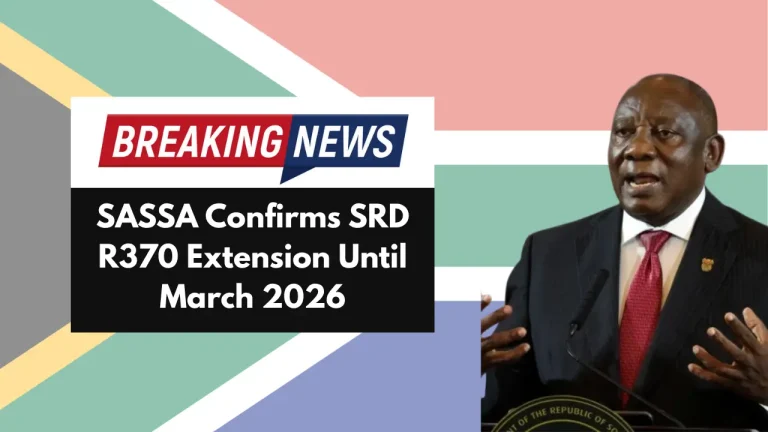
The South African Social Security Agency (SASSA) has officially confirmed the extension of the Social Relief of Distress (SRD) Grant until 31 March 2026. This grant, valued at R370 per month, continues to serve as a crucial support system for unemployed South Africans struggling with economic challenges.
This announcement brings relief to millions who rely on the SRD grant to meet basic needs such as food and transportation. The South African government has allocated R35.2 billion in the national budget to sustain the program through the extended period, reaffirming its commitment to social welfare and poverty reduction.
Why the SRD Grant Extension Was Necessary
The SRD grant was initially introduced in 2020 during the COVID-19 pandemic to support individuals who had lost jobs and income sources. Although it was meant to be temporary, ongoing economic difficulties have made it essential to continue.
According to the National Treasury, the extension to March 2026 will allow time to develop a long-term social support model that integrates employment opportunities and job readiness programs. The Department of Social Development also aims to ensure that vulnerable South Africans do not experience sudden income disruption.
SRD Grant Payment Details
The R370 value will remain unchanged until March 2026, though experts warn that rising inflation may reduce its real purchasing power over time.
Eligibility Criteria for 2025–2026
To qualify for the SRD grant, applicants must meet the following requirements:
Beneficiaries are also required to confirm their details regularly and respond to reapplication or verification requests to continue receiving payments.
Changes Introduced with the 2026 Extension
The extension introduces several important measures:
Steps to Stay Updated and Reapply
Beneficiaries are urged to stay informed and ensure their applications remain active:
Step 1: Visit the official SASSA SRD portal regularly for updates on application status and payment announcements.
https://srd.sassa.gov.za
Step 2: Keep your banking information and contact details up to date. Incorrect details may cause payment delays.
Step 3: Reconfirm your eligibility or reapply when prompted by SASSA to avoid suspension of payments.
Step 4: Follow only official SASSA communication platforms, such as verified social media accounts and press releases. Avoid rumors and unofficial sources.
Challenges and Future Outlook
While the extension has been celebrated, several challenges remain:
- Inflation Impact: The R370 amount has not increased despite the rising cost of living.
- Administrative Delays: Verification backlogs have occasionally delayed payments for beneficiaries.
- Policy Uncertainty: The transition to a Basic Income Grant is still under study and may take years to finalize.
- Fiscal Pressure: Treasury continues to highlight concerns about affordability if social grants are expanded permanently.
Despite these challenges, the SRD grant remains one of South Africa’s most impactful welfare programs, reaching over 8 million people each month.
Frequently Asked Questions (FAQs)
Final Words
The extension of the SASSA SRD R370 grant until March 2026 reaffirms the government’s commitment to supporting vulnerable citizens during difficult economic times. While it is a temporary solution, it provides a vital safety net for millions still recovering from unemployment and poverty.
As South Africa works toward developing a more sustainable income support framework, beneficiaries are encouraged to stay informed, reapply on time, and prepare for the evolving landscape of social assistance.