
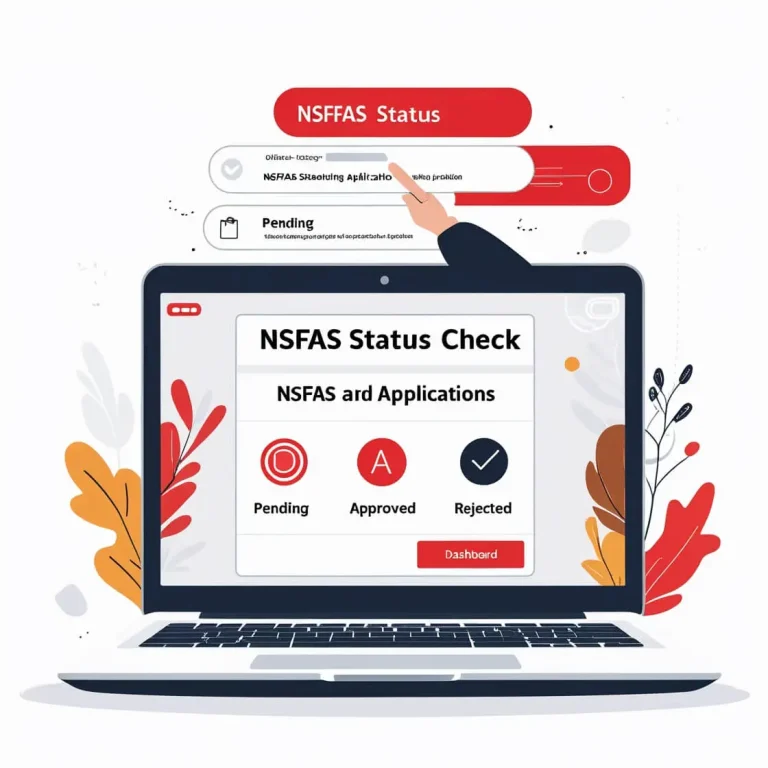
After submitting their applications for the Nsfas Program to get Government funding for their higher education, Students are very concerned about their Nsfas Status Check. They want to know whether they have been granted government funding for their higher education at a Public University or a TVET College. Nsfas Application Status is the outcome of Nsfas Application Online with a Successful, Unsuccessful, or Awaiting for Financial Eligibility assessment.
Once the students have the Nsfas Application to appeal for Government funding on their myNsfas portal, they are able to check their Nsfas Application Status.
How do you check your NSFAS application Status?
If you have submitted your NSFAS application and are waiting to check your Application Status, you can track your application by following these simple steps below.
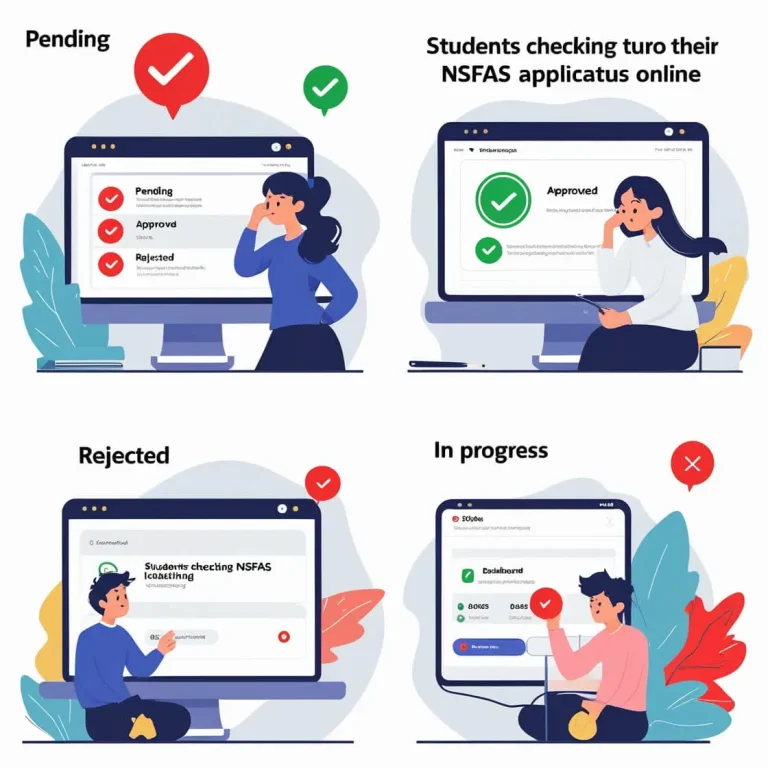
- Visit the NSFAS official Website on your Desktop or your Mobile phone. (https://www.nsfas.org.za/)
- Login to your MyNSFAS account by providing the login details.
- Find the Track Funding Process and Click on it.
- Provide your Application ID and Click on Check Status.
After submitting your Application ID, you will be able to check your NsFAS Application Status.
What is the meaning of your NSFAS Application Status?
Each NSFAS Application will have a different status depending on its eligibility criteria. Here are some NSFAS Application Statuses and their meanings.
Application Submitted: This Application status means that a student has successfully loaded their application to the NSFAS system and now must await evaluation.
Filtering Status: A Filtering NSFAS Application Status means that the student is a returning student and has Previous Qualifications funded with the Program.
Awaiting Validation: This Application status means that your application is waiting for third-party validations with the Department of Affairs and SAssa.
Evaluating: All your documents are being verified by the NSFAS authorities for authenticity.
Awaiting Academic Admissions/ Results: Your NSFAS Application is awarded with a Successful status and now you must be admitted to a funded University or TVET College. You are required to submit your Registration credentials for further evaluation.
Awaiting Registration: The NSFAS system is awaiting the confirmation of your registration in a funded Qualification.
The signing of the Agreement: You must sign an agreement with NSFAS authorities that your funding can be disbursed at any given stage.
Payments: Your qualifications will now receive the Government funding for the Higher Studies.
Students who have applied for the NSFAS Program can check the latest updates by logging in to their MyNSFAS account.
Why do you need to regularly check your NSFAS Application Status?
If you have submitted an application for NSFAS funding, then you may need to check your application status. If your application has been awarded a successful status, then you should take admission in NSFAS-funded institutions and provide your admission credentials.
If a student fails to take admission and provide Registration to the NSFAS system, then their NSFAS funding may be disbursed and awarded to other students.
How Do you Check NSFAS Application using the Reference Number?
Students who have applied for NSFAS program can also check their NSFAS Application status by providing their Reference Number. A Reference number is an ID that is allocated to an application when a student applies for the NSFAS funding. Here is How to check your NSFAS Application using your Reference number.
- Visit the official website of NSFAS using your laptop or Smartphone. (weee.NSFAS.org.za).
- Click on the MYNSFAS link and provide your login details to access your MyNsFAS user section.
- Once logged in Click on Check my Application Status.
- Provide your reference Number ID that you have received when you applied for the NSFAS Program.
- Click on Submit Reference ID to get your NSFAS application status.
- It will provide your NSFAS Application status with a successful, declined or awaiting for Financial eligibility status. Each status requires different actions to proceed.
What Does the NSFAS Program Offer to Successful Applicants?
NSFAS covers a wide range of expenses for the successful applicants. So that South African Citizens who have poor Financial conditions can continue their Higher Education with Government Funding. This Program Includes Student Accommodation, Transportation, Books, Car Insurance, Food, Registration and other Academic Allowances.
Universities
The Students who have applied for a qualification in a Public university with an NSFAS Program will get:
- Accommodation ( As per the cost charged by the university and Private accommodation must not be more than the cost charged by the University).
- R 57,00 per annum Transportation Allowances (upto 40 Km).
A Living allowance of R 15,000 Per annum.
- Book Alolowances of R 52,00 Per Annum.
- Incidental Car Allowances of R2900 per annum.
TVET Colleges
Students who have applied for a qualification in a TVET College with an NSFAS Program will get the following Benefits:
- An Allowance of R24,000 per annum in an Urban Area.
- An Accommodation Allowance of R18,900 in a Peri-Urban Area
- An Allowance of R15,750 per annum for Rural Areas
- Transport Allowance of R73,50 Per Annum (up to 40Km from the Institution)
- An Incidental Car Allowance of R2900 Per Annum
What Programs are being funded by NSFAS?
NSFAS is providing Government for students with Poor Financial Conditions for more than 70 Programs in Public Universities and TVET Colleges. Here are the Qualifications funded by the NSFAS Program.
- Visual Arts
- Finance, Economics, and Accounting
- Promoting health and developmental services
- Primary agriculture
- Environmental Sciences
- Music
- Cleaning, Domestic, Hiring, Property, and Rescue Services
- Rehabilitative Health Services
- Mathematical Sciences
- Physical Planning, Design, and Management
- Human Resources
- Engineering and Related Design
- Psychology
- Communication Studies
- Marketing
- Film Television and Video
- Religious and ethical foundations of Society
- Public Policy, Politics, and Democratic Citizenship
- Urban and Regional Studies
- Justice in Society
- Wholesale and retail
- Curative Health
- Industrial & Organizational Governance and HR Development
- Media Studies
- Schooling
- Environmental relations
- Occupationally Directed ETD Practice
- Public Administration
- Manufacturing and assembly
- Higher Education and Training
- Electrical infrastructure construction
- Early childhood development
- Nature conservation
- Information Studies
- Hospitality, Tourism, Travel, Gaming, and Leisure
- Sport
- Design Studies
- Language
- Information Technology and Computer Science
- Secondary agriculture
- Cultural Studies
- Safety in society
- Building Construction
- Forestry and wood technology
- Public relations
- Process Instrumentation
- Mechatronics
- Fabrication and extraction
- Process Plant Operations
- Preventive health
- Horticulture
- Adult learning
- Generic
- Earth and Space Sciences
- Drawing Office Practice
- Transport, Operations, and Logistics
- Consumer Services
- Physical Sciences
- People-/human-centered Development
- Personal care
- Literature
- Traditions, History, and Legacies
- Performing arts
- Life sciences
- Project Management
- General social science
- The State’s Sovereignty
- Generic management
- Procurement
- Rural and agricultural
- Office Administration
Who can apply for NSFAS Funding?
NSFAS student funding requires to meet some eligibility criteria. The student who fails to fulfill this criterion will get a declined status for their NsFAS application. Here is who can apply for NSFAS student funding.
- You must be a South African Citizen.
- Your collective Annual Household income must be less than R3,0000.(or in case of a disability it must be less than R600,000).
- You must get admission to a Public University or TVET College to and provide your registration details.
How to Contact NSFAS Authorities for NSFAS Application Status?
The Students who have applied for the NSFAS program and want to contact NSFAS Authorities to know about their application status can check their Official Website and Social Media Accounts.
Here is the list of NSFAS Official Contacts.
- mail: info@nsfas.org.za
- Twitter: @myNSFAS
- Facebook: National Student Financial Aid Scheme
- Instagram: @myNSFAS
- USSD: *120*67327#
- WhatsApp: +27 78 519 8006
Conclusion:
Students who apply for the NSFAS program like to their NSFAS application status after submitting their applications. Such students may need to log in to their myNSFAS panel and track their application to know their application status. NSFAS Applications may have different statuses for each application. Successful students may need to take admissions in NSFAS-funded institutions after checking their Application statuses.
Pingback: Nsfas Funding Decisions