
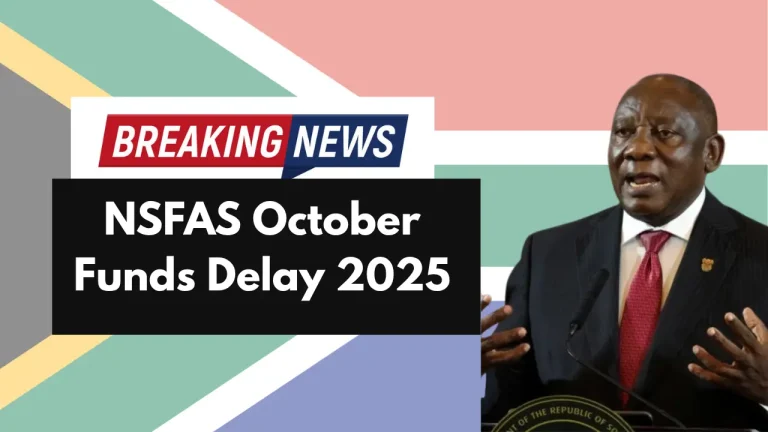
Thousands of South African students funded by the National Student Financial Aid Scheme (NSFAS) have reported delays in receiving their October 2025 allowances. These allowances are meant to help cover essential living costs, such as accommodation, food, and transport, but many students say their funds haven’t yet arrived.
This article explains why some NSFAS payments are delayed, what you can do to fix the issue, and how to confirm your payment status through the official NSFAS platform.
What Are NSFAS October Funds?
Every month, NSFAS provides approved students with financial support for non-tuition expenses. These include:
- Accommodation or housing allowances for students staying in residences or private rentals
- Meal and living allowances to help with daily expenses
- Transport allowances for students commuting to campuses
- Learning material allowances for textbooks, stationery, or digital resources
The October funds are part of these regular monthly disbursements. Normally, payments are released in the first or second week of the month — but delays can happen when data or banking issues occur.
Why Are Some Students Still Waiting for Payment?
NSFAS confirmed that the majority of October payments have been processed successfully. However, several students across public universities and TVET colleges are experiencing delays due to administrative and verification issues.
Here are the most common reasons for delayed NSFAS payments:
1. Late or incomplete registration uploads
If your institution hasn’t submitted your registration data on time, NSFAS can’t process your payment. Each student’s details must be verified by their institution before the allowance is released.
2. Incorrect or unverified bank details
Many students either entered the wrong account number or didn’t complete the bank verification process. NSFAS uses your verified bank information to send allowances directly to you — if it doesn’t match your ID or profile, payment won’t go through.
3. Academic performance issues
Students who didn’t meet academic progression requirements (such as failing more than 50% of modules) may experience temporary holds while NSFAS re-evaluates eligibility.
4. System or technical delays
Occasionally, internal system errors or payment reconciliation issues at institutions can cause delays in batch transfers.
5. Missing documents or profile errors
If you recently changed your phone number, ID, or institution and haven’t updated your myNSFAS profile, your payment might be flagged for review.
How to Check Your NSFAS October Payment Status
If you haven’t received your allowance, you can track your status directly from the official NSFAS portal. Follow these verified steps:
- Go to the official NSFAS website: https://www.nsfas.org.za
- Click on “myNSFAS” at the top-right corner of the page.
- Log in using your registered email address and password.
- Once logged in, navigate to the “My Payments” or “Allowance Status” section.
- Check if your October 2025 payment status says “Processed,” “Pending,” or “Not Yet Paid.”
- Verify your bank account details under your profile settings — make sure they match your personal information.
- If your payment still shows as “Pending,” contact your university or TVET college financial aid office to confirm that your registration data was sent to NSFAS.
If everything looks correct and payment still hasn’t reflected, you can also submit an inquiry directly through the NSFAS website’s contact form or call NSFAS Support at 08000 67327.
What to Do If You Haven’t Received Your October Funds
If your payment is delayed, don’t panic — but take action immediately. Here’s what you should do:
You can also monitor government updates related to NSFAS funding delays at https://www.gov.za.
What NSFAS Has Said About the Delays
NSFAS has acknowledged that technical and administrative challenges may cause slight delays for some students but emphasized that all eligible beneficiaries will receive their funds once verification is complete.
In its official statement, NSFAS urged institutions to “ensure that registration and allowance data is submitted promptly” so that students don’t experience unnecessary hardship.
The agency also assured students that there are no mass payment cancellations, and every verified recipient will eventually receive their allowances. However, it reminded students to regularly check their myNSFAS accounts to stay informed about disbursement timelines.
Why These Funds Are So Important for Students
For most NSFAS beneficiaries, these allowances are not optional — they’re essential for survival. Many students rely entirely on them to pay rent, buy groceries, or afford transportation to campus. Even short delays can cause severe financial distress, leading some to skip meals, miss classes, or default on accommodation payments.
The NSFAS allowance system is designed to bridge the financial gap and ensure all South African students, regardless of income level, can pursue higher education successfully.
How to Avoid Future Delays
If you’re currently funded by NSFAS, here are a few proactive steps to make sure your future payments arrive on time:
- Keep your myNSFAS profile updated every semester.
- Double-check your bank details before each disbursement period.
- Stay in touch with your financial aid office to ensure your registration data is correctly uploaded.
- Respond promptly to any communication or verification request from NSFAS.
- Use only the official NSFAS website — avoid third-party platforms that claim to “speed up” your payment.
Taking these precautions helps reduce administrative issues and ensures your allowances continue smoothly.
Frequently Asked Questions (FAQs)
Final Words
The NSFAS October allowance delay is temporary for most students, but taking quick action can make a big difference. Check your myNSFAS profile regularly, confirm your details, and follow up with your institution if your payment is still pending.
For the latest updates, visit the official NSFAS website at https://www.nsfas.org.za or contact their toll-free support line at 08000 67327.
Stay informed, stay proactive, and make sure you never miss your next NSFAS payment.